Can you have a headstone if you are cremated?
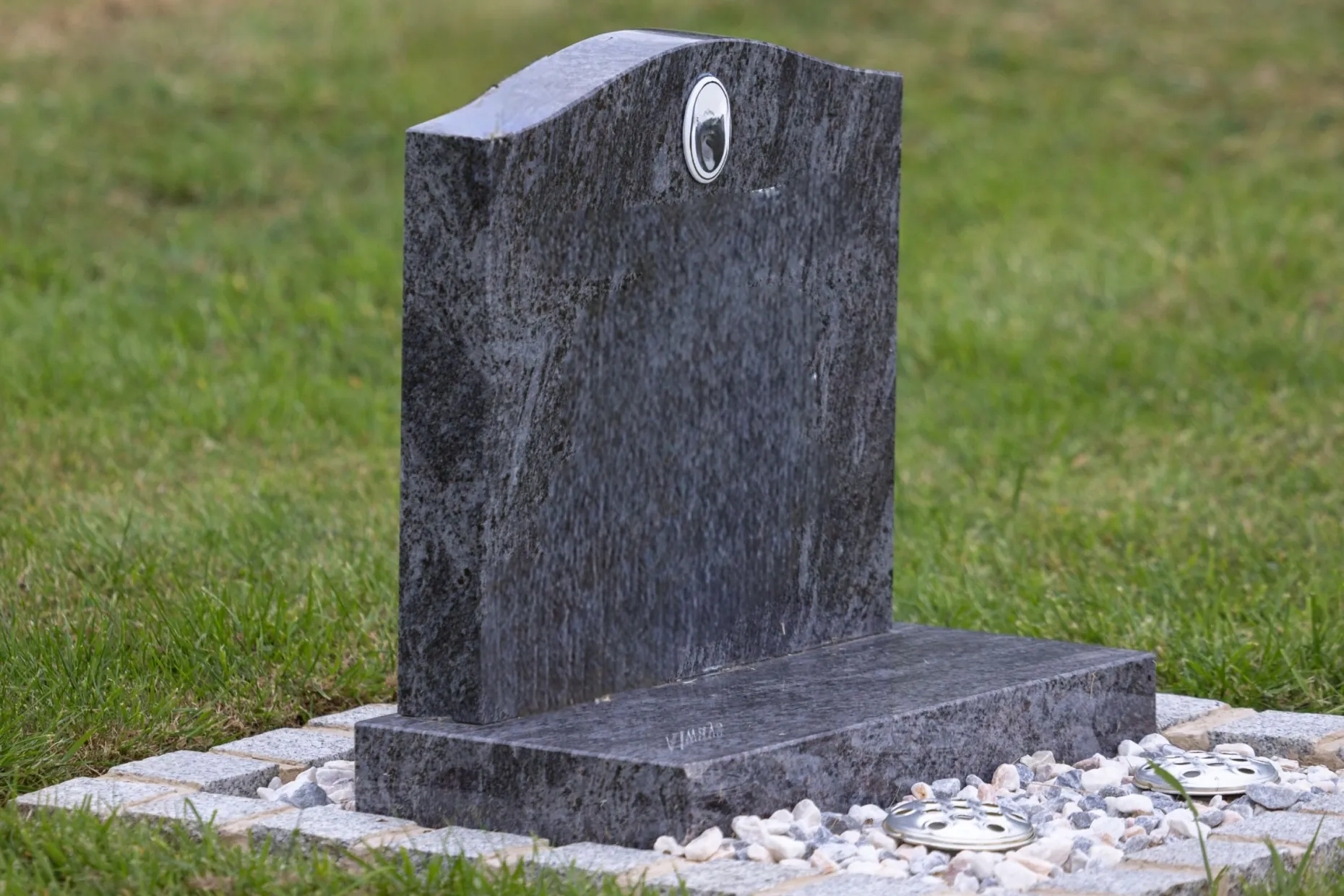
For many families, cremation is only part of the journey. A permanent memorial offers a dedicated place to visit, pause, and remember.
If you’d like to discuss your memorial options in person, our friendly specialists are here to help. You’re invited to arrange a visit, take a guided tour of the grounds, and explore all the possibilities together. We’ll help you to choose the perfect lasting tribute with confidence and care.
Yes, you can have a headstone after cremation
The word headstone is often used as a catch-all term. In practice, cremation memorials can include:
- A small upright stone (often used on ashes plots)
- A flat or slightly raised tablet/marker set into the lawn
- A plaque on a memorial wall or in a garden of remembrance
- An engraved niche front on a columbarium (a structure build to store ashes securely)
Whatever the format, the purpose is the same – a named place that helps people feel close, mark anniversaries, and keep someone’s memory present in a simple, tangible way.
The key decision: where will the ashes be placed or commemorated?
Before you choose the style of the memorial, it helps to decide what you would like to happen to the ashes. Common options for ashes include:
- Buried in memorial garden – a dedicated space to visit and remember loved ones for years to come.
- Held in a niche or sanctum – a dedicated, secure space for an urn, usually with an engraved plaque on the front.
- Placed in an existing family grave – possible in many places and needs permission from the grave owner/right-holder and the site.
- Scattered in a garden of remembrance – tributes without ashes can include plaques, benches, memorial walls nearby and memorial gardens.
- Scattered somewhere meaningful (with permission where required) – you may still choose a memorial elsewhere for visiting and reflection.
- Kept at home – some families keep an urn privately and create a separate public memorial space for others to visit.
If you'd like an option for family members to be reunited when the time comes, a number of memorial choices are available to support this wish.
Read on to explore these options in more detail.
A headstone in a memorial garden (ashes plot)
A memorial garden (or ashes plot) is a smaller burial space within a crematorium where ashes are buried. If your aim is to have a traditional headstone – a stone at the head of a plot with a name and inscription – this is often the closest match. We offer lots of different options in the grounds of our beautiful crematoria.
Because memorial gardens are usually smaller than full graves, the memorial is often a smaller, proportionate version of a traditional headstone, or a low marker that sits neatly within the section.
- Small upright headstones – typically set on a base, with space for an inscription and sometimes a small vase.
- Desk or slant tablets – gently angled for easier reading, popular where upright stones are limited.
- Flat lawn plaques/tablets – discreet markers set flush or near-flush within the ground for easier mowing and maintenance.
Why families choose this option: it creates a clear place to return to, and it’s often easier for future generations to find and care for. It can also feel comforting to have a memorial that looks familiar.
A niche or sanctum, with an engraved plaque
A columbarium is a structure made up of individual compartments (called niches) designed to hold urns. Some are indoors, some are outdoors – but the experience is usually similar: you visit a dedicated, peaceful space and see the person’s name on the front of the niche.
How the memorial works: The niche is typically sealed with an engraved stone or plaque (often granite or bronze). This becomes the visible memorial – the place where visitors read the name, reflect, and leave flowers.
Who it suits: families who want an above-ground memorial that’s tidy, easy to find, and simple to maintain – especially if visiting a traditional grave feels difficult, or if the family prefers a sheltered, structured memorial area.
Niches may be single or shared: sometimes they are designed to hold two sets of ashes, and the plaque often has a limited number of lines. Many crematoria will provide a layout proof for you to approve before the inscription is made, and there may be a typical lead time (for example, several weeks) between approval and installation.
A memorial marker or plaque when ashes are scattered or kept
If the ashes are scattered (or kept privately), you can still choose a memorial that gives family and friends somewhere to visit. For many people, this is a comforting middle ground – you can honour a meaningful scattering choice while also creating a lasting, named tribute.
Memorial options when ashes aren’t in a plot
- Garden of remembrance plaques – many crematoria offer plaques in designated areas, or on memorial walls, sometimes with time-limited leases.
- Church memorials – some churches can offer internal memorial options (such as wall tablets), subject to permission.
- Benches, trees, or books of remembrance – for families who prefer a communal space that still feels personal.
Rules and permissions: what affects whether a headstone is allowed?
In the UK, whether a headstone (or any memorial) is allowed comes down to the rules of the place where it will go. These rules can feel strict when you’re grieving, but they usually exist for understandable reasons – safety, maintenance, and keeping the space respectful for everyone.
Cemeteries and crematoria
Most cemeteries and crematoria have published memorial masonry regulations for each section (including cremation areas). Typically, the person who holds the burial rights/lease for the plot or niche is the one authorised to apply for a memorial or an additional inscription. This protects families and helps avoid changes being made without the right consent.
Churchyards (consecrated ground)
Churchyards often have diocesan churchyard regulations that cover memorial materials, finishes, shapes, inscriptions, and what can be placed on graves. In many cases, a priest can approve a memorial that fits within those regulations – but if you want something outside the standard rules, a formal permission process may be required. It can take a little longer, but it’s simply the church’s way of caring for a shared, historic space.
Helpful tip: ask for the written regulations before choosing a memorial.
When can you put up a headstone after cremation?
There’s no single rule for timing. Some families arrange a memorial quite soon, while others wait until life feels a little steadier. Practical factors also matter, such as administration and, for ground memorials, allowing time for the ground to settle
How much does a headstone for ashes cost?
Costs can vary depending on the memorial type, materials, and local regulations.
What you’re usually paying for
- The memorial itself (stone or plaque)
- Lettering and any additional design work (motifs, etching, gilding, etc.)
- Fixings and installation (including safety standards)
- Permit/application fees charged by the cemetery/crematorium (where applicable)
If you can, ask for an itemised quote and check whether it includes everything needed for approval and installation. It can also be worth asking about the cost of an additional inscription later (for example, for a partner) so there are no surprises down the line.
Choosing the right memorial: design, wording, and personal touches
There are lots of meaningful ways to make a memorial feel personal, respectful, and fitting for the person who has died. The choices you make about the design, inscription, and finishing touches will help create a lasting tribute that truly honours your loved one.
- Inscriptions: Most memorials feature the full name and dates of the person being remembered. Many families also include a brief line, such as a favourite phrase, a verse, or a loving sentiment. It’s important to keep within the character limits specified for plaques or columbarium niches, as space is often limited. Before finalising, check with the cemetery or crematorium for guidance on inscription layouts and approval processes.
- Symbols and imagery: You may wish to add a symbol or motif that reflects the person’s beliefs, interests, or personality. For example, a religious emblem, nature scene, or hobby-related icon. However, these additions must comply with the site’s regulations. Always consult the written rules to ensure your chosen design is permitted.
- Finish and readability: The appearance and durability of the memorial are equally important. Consider materials and finishes that provide good contrast between lettering and background, making inscriptions easy to read. Weathering and maintenance needs should also be considered: granite and bronze are popular options for longevity, and a well-chosen finish will help the memorial remain clear and attractive over time.
- Future planning: If you anticipate that the plot or niche may be shared, for example, with a spouse or partner, it’s wise to plan for additional inscriptions. You can discuss options with the memorial mason or our memorial special, ensuring space is reserved for future names, dates, or messages. This helps avoid complications and ensures the memorial can evolve gracefully as needed.
By considering these elements – inscription, symbolism, finish, and what you might want in the future – you’ll be able to create a memorial that offers a heartfelt place for remembrance.
If you would like to talk things through with a specialist, find your local crematorium. They will answer your questions, give you a guided tour of the grounds, and help you plan a meaningful, personal memorial.
FAQs
- Can ashes be buried in a family grave and still have a headstone?
Yes, ashes can often be interred in an existing family grave, and you can add a headstone or an inscription to acknowledge the person’s resting place. However, you’ll need to follow the cemetery or churchyard’s regulations about memorials and inscriptions. If you’re planning to add a new headstone or update an existing one, it’s important to seek permission from the site and ensure you have the burial rights or lease for the grave.
- Can more than one set of ashes go in the same plot or niche?
In many cases, it is possible to place more than one set of ashes in a single plot or columbarium niche. Some niches and plots are specifically designed for two or more sets of remains, such as for couples or family members. Be sure to check with the cemetery or crematorium regarding their policies, and plan ahead for additional inscriptions if you expect to add more names later.
- Can you have a headstone if the urn is kept at home?
While you can’t place a traditional headstone in a cemetery or churchyard if the ashes aren’t interred there, you can still arrange for a memorial plaque, bench, or another tribute in a designated area. Some families choose to install a plaque in a garden of remembrance or on a memorial wall, even if the urn is kept at home, providing a place for friends and relatives to visit and pay their respects.
- What’s the difference between a headstone, gravestone, and grave marker?
A headstone typically refers to an upright stone placed at the head of a grave. Gravestone is a more general term for any stone marking a grave, and a grave marker can be any kind of marker (not necessarily stone) used to identify a burial site. Markers can include plaques, tablets, or even simple signs, and are often used when ashes are scattered, or in communal memorial spaces. The terminology can vary, but the primary difference is the form and location of the memorial.